The crushing cost of a college education today > Beyond Thoughts

23 Feb

The compression of generations – 25 million adults live at home with parents because they’re unemployed or underemployed. The crushing cost of a college education today.

The thought of moving out on your own and making your individual way in the world is very much an American trait.  Certainly movies and television shows almost always assume every American has moved out on their own once adulthood is reached.  What this recession has taught us is never take anything for what is shown on the surface.  Many young adults, many times to the chagrin of baby boomer parents, have moved back home because of the employment market conditions brought on by the recession.  Roughly 25 million adults live at home with their parents for a variety of reasons but mostly economic.  For many the debilitating cost of student debt is hindering their progression into the independent marketplace.  For others it is the lack of solid wages that actually provide enough to support a person living on their own.  And for many others the inability to find a job is still a very common experience.


Where have the young adults gone?

Without a doubt many young adults, those between the ages of 25 to 34 have moved back home (or never left home) because of the recession:

census age living at home

Source:  Census

Part of the trend is unmistakable in that much of the growth has come from men.  This is likely due to industries like construction taking a brutal hit once the housing market went bust.  However the trend has also occurred with females if we go back to the early 2000s.  There are a variety of reasons for this compression of generations.  This is common in other parts of the world but certainly is a new phenomenon here in the US.  In Italy it is common for men to live at home well into (and beyond) young adulthood but how well will this go in the US?

It doesn’t seem like much of this is by voluntary choice:

Astronomical Clock in Old Town Square, Prague

30 Oct

Microsoft’s Bill Gates: A rare and remarkable interview with the world’s second richest man | Mail Online

12 Jun

This is not the way I’d imagined Bill Gates… A rare and remarkable interview with the world’s second richest man

By CAROLINE GRAHAM in SEATTLE


Rocking gently in his chair, he begins to sing: ‘I wanna be a billionaire so freakin’ bad. Buy all the things I never had. I wanna be on the cover of Forbes magazine. Smiling next to Oprah and the Queen…’


'It will be a minuscule portion of my wealth. It will mean they (his children) have to find their own way. They will be given an unbelievable education... But they will have to pick a job they like and go to work,' said Bill Gates

‘It will be a minuscule portion of my wealth. It will mean they (his children) have to find their own way. They will be given an unbelievable education… But they will have to pick a job they like and go to work,’ said Bill Gates


Travie McCoy and Bruno Mars’s hit Billionaire reached No 3 on both sides of the Atlantic last year. The  irony of the lyrics isn’t lost on either of us. They are, Gates chuckles, regularly used by his three children  to poke fun at him.

At 55, he has graced the cover of Forbes magazine many times. As the co-founder, with Paul Allen, of Microsoft, he grew a 1975 back-room start-up into a software behemoth worth, at its peak, $400 billion. Oprah Winfrey is a close friend; the pair meet regularly and she has discussed signing his ‘Giving Pledge’ to donate the bulk of her $2.7 billion estate to charity.

And the Queen? Well, she gave him an honorary knighthood back in 2005.

‘The Billionaire song is what my kids tease me with,’ he says. ‘They sing it to me. It’s funny.’

They have apparently also introduced him to the ‘joys’ of Lady Gaga, ‘but the 12-year-old is always worried about the nine-year-old listening to songs with bad words. So he’s like, “No! Skip that one!” So I only know some Lady Gaga songs.’

It’s probably just as well his children have a well-developed sense of humour. Gates is officially the second richest man in the world, only losing the No 1 spot to Mexican businessman Carlos Slim last year, after holding it for nearly two decades, on a technicality; he has given away $28 billion to charity, so is now personally worth ‘only’ $56 billion.

But Jennifer, 15, Rory, 12, and Phoebe, nine, aren’t going to inherit anything like that much.

‘I don’t think that amount of money would be good for them.’


To say that Gates is socially awkward is putting it mildly. This is a man who built a multi-billion-dollar company yet seems totally unaware of the social niceties of life (pictured above: Caroline Graham with Bill)

To say that Gates is socially awkward is putting it mildly. This is a man who built a multi-billion-dollar company yet seems totally unaware of the social niceties of life (pictured above: Caroline Graham with Bill)

He won’t specify what they will get, but the reports that they’ll receive ‘only’ $10 million each can’t be far off, because he concedes, ‘It will be a minuscule portion of my wealth. It will mean they have to find their own way.

‘They will be given an unbelievable education and that will all be paid for. And certainly anything related to health issues we will take care of. But in terms of their income, they will have to pick a job they like and go to work. They are normal kids now. They do chores, they get pocket money.’

He is determined that his family life should be as unaffected as possible by his fortune, and that he should be a hands-on father.

‘I never took a day off in my twenties. Not one. And I’m still fanatical, but now I’m a little less fanatical. I play tennis, I play bridge, I spend time with my family. I drive myself around town in a normal Mercedes. I’ve had a Lexus. The family has a Porsche, which is a nice car that we sometimes take out. We have a minivan and that’s what we use when it’s the five of us. My eldest daughter rides horses, so we go to a lot of three-day shows. The kids are a big part of my schedule.’

Bill Gates: 'I never took a day off in my twenties. Not one. And I'm still fanatical, but now I'm a little less fanatical'

‘I never took a day off in my twenties. Not one. And I’m still fanatical, but now I’m a little less fanatical’

Has he succumbed to the inevitable pleas from the children for an iPad, iPhone and iPod? His face hardens: ‘They have the Windows equivalent. They have a Zune music player, which is a great Windows portable player. They are not deprived children.’

He mentions a U2 concert he attended the previous night in Seattle, which has been the talk of the town. He has been friends with Bono for years; along with his wife, he shared the cover of Time magazine with him in 2005, when the trio, dubbed ‘The Good Samaritans’ for their philanthropy, were named ‘Persons of the Year’.

‘We went to the concert with my daughter and three of her friends, so there were six of us and we took the minivan. I drove.’

Did Bono invite them backstage? A long pause, then: ‘Umm, no – actually, he stayed at our house.’ Of course.

There’s something surreal about hearing Gates talk on such a personal level. Meeting him is comparable to meeting a head of state. We’re in a conference room in the sparkling new home of the Bill & Melinda Gates Foundation in Seattle, a $500 million glass-walled, eco-friendly office space which Gates jokes is ‘mostly the brainchild of my wife – I just signed all the cheques’.

To say that Gates is socially awkward is putting it mildly. This is a man who built a multi-billion-dollar company yet seems totally unaware of the social niceties of life. His voice is loud and oddly high-pitched. He’s in constant motion as he speaks, rocking in his chair with his arms folded protectively in front of him, tapping his toes, fiddling with a pen. He fails to look me in the eye and doesn’t engage in small talk.

I ask him whether this is it now – is Microsoft history to him, replaced in his heart by his philanthropy? He retired from the day-to-day running of Microsoft in 2008, with many believing it has since lost its edge to companies like Apple and Google.

He says, ‘My full-time work for the rest of my life is this foundation.’

A police mugshot of Bill Gates after his arrest for driving without a licence in 1975

A police mugshot of Gates after his arrest for driving without a licence in 1975

Will he ever return to helm Microsoft?

‘No. I’m part-time involved. But this is my job now.’

His foundation has assets worth $37.1 billion, thanks in part to contributions of shares from his mentor, American ‘uber-investor’ Warren Buffett. But forget the figures. The only thing Gates wants you to know is that he intends to give it all away.

Famously publicity-shy, he has granted this rare one-on-one interview to Live not – unsurprisingly – to talk about what non-Apple gadgets his children have, but to promote a ‘pledging conference’ for donors and partners of the GAVI Alliance (the Global Alliance for Vaccines and Immunisation, which Gates co-founded in 2000) that kicks off in London on Monday.

Hosted by David Cameron, the event marks the culmination of a drive, spearheaded by Gates, to raise $3.7 billion to vaccinate 243 million children in the world’s poorest countries against illnesses such as pneumonia and measles. Gates and Cameron are expected to announce the money has been successfully raised and, it’s hoped, will save four million lives over the next four years.

His foundation began humbly in 1994 after a double whammy that made the billionaire think about his own mortality. It was the year Gates married Melinda, 46, a former Microsoft manager, and when his much-loved mother Mary, a former teacher and businesswoman, died of breast cancer.

After Mary’s death, Gates’s father Bill Sr, feeling listless, started ploughing through the stacks of begging letters which had piled up at his son’s office, simply ‘for something to do’. He would send the requests he thought worthy to his son, who would then write the cheques, which Bill Sr would send out with brief notes. Bill Sr is now co-chair of the foundation, and still shows up for work every day, despite being 85.

In a letter to her daughter-in-law on the eve of the wedding, Mary Gates wrote, ‘From those to whom much is given, much is expected.’

Gates still has the letter.


Gates at work in 1984. As the co-founder, with Paul Allen, of Microsoft, he grew a 1975 back-room start-up into a software behemoth worth, at its peak, $400 billion

Gates at work in 1984. As the co-founder, with Paul Allen, of Microsoft, he grew a 1975 back-room start-up into a software behemoth worth, at its peak, $400 billion

‘It was six months before my mum died, so of course we kept that. It’s at home.’

Gates decided vaccinating the world’s disadvantaged is a cost-effective, simple way to help the very poor.

‘You get more bang for your buck.’

Why not be the guy who cures cancer instead?

‘The motto of the foundation is that every life has equal value. There are more people dying of malaria than any specific cancer. When you die of malaria aged three it’s different from being in your seventies, when you might die of a heart attack or you might die of cancer. And the world is putting massive amounts into cancer, so my wealth would have had a meaningless impact on that.’

He is swift to praise the Prime Minister for increasing Britain’s foreign aid.

‘What David Cameron is doing is something to be proud of. The UK has led the way, particularly in getting value for money. Your government went and ranked the various aid groups. Some came out poorly and some came out very strongly. GAVI was ranked one of the best of all, because if you give those vaccines to the poorest of the poor, the impact on saving lives and avoiding sickness is incredible.’

Bill and Melinda Gates in India earlier this year. Their foundation has assets worth $37.1 billion. He intends to give it all away

Bill and Melinda Gates in India earlier this year. Their foundation has assets worth $37.1 billion. He intends to give it all away


I mildly disappoint him when I ask whether foreign aid really does go to the most deserving. What about Robert Mugabe’s henchmen skimming off millions in Zimbabwe?

‘Well, no one gives aid to Zimbabwe through the Mugabe government,’ he says sharply.

‘Charities like the World Food Programme go in on a direct basis. When we buy vaccines we are super-smart about what we pay. We get price reductions. We can track how many kids get the vaccines. People don’t stockpile vaccines. It’s not like you’re going to go to Mugabe’s mansion and you’d find polio vaccines in the basement and he’s going’ – at this point, marvellously, he breaks into a Dr Evil impression – ‘“Ha, ha, ha! I took it ALL!”’

Bill Gates: 'When you go into a ward with kids who have cholera, it's horrific'

‘When you go into a ward with kids who have cholera, it’s horrific’

How about countries like India, which receives billions in aid yet has 70 billionaires and a space programme?

‘Countries which receive aid do graduate,’ he insists. ‘Within a generation Korea went from being a big recipient to being a big aid donor. China used to get quite a bit of aid; now it’s aid-neutral. India in the north still needs all the help we can give in terms of helping with childhood death rates, maternal deaths and polio.

‘It is important to me to get out into the field. I went to Uttar Pradesh (in northern India) recently. It was a long way from this…’

He waves his hand around the conference room.

‘It is important to see places. When you go into a ward with kids who have cholera, it’s horrific. They are losing their vital fluids and their brains are shutting down. As a father, as a human, it’s just horrific.

‘I met this girl, Hoshman, a polio victim. She’s three years old and can’t walk and never will. She’s just beginning to realise how different her life will be from the other kids’. I spoke to her mum and her older sister. Because of the work we’ve done she will be one of the last 50 kids in India to be paralysed from polio.’

He smiles when I tell him one of his foundation workers told me how he helped pull himself across a river in Uttar Pradesh, and that while everyone in the Western world has heard of Bill Gates, in the Third World he’s a nobody.

‘Oh, absolutely. They don’t know who I am, because it doesn’t relate to their world. I went to one place with the chief minister and someone said, “Who is this guy?”, and the chief minister said, “This is a white-skinned guy I brought with me.” If you’re a person struggling to eat and stay healthy you might have heard about Michael Jordan or Muhammad Ali, but you’ll never have heard of Bill Gates.’

His passion for aid is such that he devotes his spare time to reading about it: ‘At the moment I’m reading Getting Better by Charles Kenny, and I’m going to China soon, so I’m reading The Dragon’s Gift, about the history of Chinese aid to Africa.’

Gates is a voracious reader. His famously palatial home – a £100 million, 66,000 sq ft hi-tech wonderland overlooking nearby Lake Washington – has a library packed with books. Ironically, he prefers his books in old-fashioned physical form: ‘I read a lot of obscure books and it is nice to open a book. But the electronic devices are good as well. Digital reading will completely take over. It’s lightweight and it’s fantastic for sharing. Over time it will take over.’

His pride and joy is the Codex Leicester, one of Leonardo da Vinci’s notebooks, which he bought in 1994 for $30.8 million.

‘I’m lucky that I own that notebook. I’ve always been amazed by Da Vinci, because he worked out science on his own. He would work by drawing things and writing down his ideas. Of course, he designed all sorts of flying machines way before you could actually build something like that.’

He says it would be one of the first things he’d rescue from his home in a fire, but adds, ‘I have documents by Isaac Newton and Abraham Lincoln. I have some pretty nice art too. It would be a shame to lose any of that.’

He’s still inquisitive about technology. Pointing to a large whiteboard behind my head in the conference room, he gives me a tip.

‘The next big thing is definitely speech and voice recognition. You’ll be able to touch that board or speak to it and get your message to colleagues around the world. Screens are cheap.’

He has his own Twitter account and Facebook page, although ‘I had a problem with Facebook, because the friend requests got out of hand’.

He is friends with Facebook founder Mark Zuckerberg, 27, who has already pledged to give most of his fortune away. Gates lets slip that Zuckerberg may be engaged to Priscilla Chan, his long-term girlfriend: ‘I didn’t say to Mark, “Give me all your money!” He was predisposed to do it and he came to me seeking advice.

‘His fiancée Priscilla thought about education and he gave money to Newark, New Jersey, and we did a co-grant so that some of our people who had some expertise in that field could help him out. He deserves credit. I started meaningful philanthropy in my forties. He’s starting way earlier.’

I ask about his ‘legacy’, and for the first time I understand how Microsoft employees felt when Gates interrupted meetings to declare, ‘That’s the stupidest idea I’ve ever heard!’

‘Legacy is a stupid thing! I don’t want a legacy. If people look and see that childhood deaths dropped from nine million a year to four million because of our investment, then wow! I liken what I’m doing now to my old job. I worked with a lot of smart people; some things went well, some didn’t go so well. But when you see how what we did ended up empowering people, it’s a very cool thing.

‘I want a malaria vaccine. If we get one then we’ll have to find the money to give it to everyone, but the impact would be so huge we would find a way. Understanding science and pushing the boundaries of science is what makes me immensely satisfied. What I’m doing now involves understanding maths, risk-taking. The first half of my life was good preparation for the second half.’

Gates was always described as a geek, but that seems terribly unfair in the wider context of the passions that now drive him. As I stand to leave, he laughs the label off.

‘Hey, if being a geek means you’re willing to take a 400-page book on vaccines and where they work and where they don’t, and you go off and study that and you use that to challenge people to learn more, then absolutely. I’m a geek. I plead guilty. Gladly.’


Microsoft’s Bill Gates: A rare and remarkable interview with the world’s second richest man

12 Jun
‘It will be a minuscule portion of my wealth. It will mean they (his children) have to find their own way. They will be given an unbelievable education… But they will have to pick a job they like and go to work,’ said Bill Gates To say that Gates is socially awkward is putting it mildly. This is a man who built a multi-billion-dollar company yet s ..read more.. 

Plundering the middle class – 35 percent of American households live on $35,000 or less each year. Bailouts a success for the wealthiest 5 percent of Americans.

29 Sep

Plundering the middle class – 35 percent of American households live on $35,000 or less each year. Bailouts a success for the wealthiest 5 percent of Americans.

The middle class is being slowly dismantled piece by piece.  New Census data released this week highlights a continuing trend that is pushing more average Americans into a perpetual struggle to stay financially afloat.  New data shows that the median household income is $50,221 in 2009 which is down from $52,029 in 2008.  This drop of 3.6 percent comes at a time when many U.S. households are struggling to make payments on mortgages and more importantly, find jobs.  The only group that grew their household income was for those making $180,000 or more (top 5 percent).  This growing inequality gap demonstrates that this recession is actually widening the chasm between the working and upper-classes of our society.  I went ahead and took the data from the new Census report and created the following income distribution chart:

us household income chart

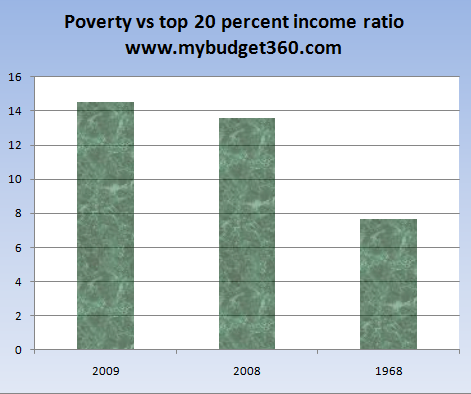
35% of U.S. households live on $35,000 or less.  The hope of making it into the middle class for this group is getting tougher and more financially challenging.  Those making more than $100,000 fall under the top 20 percent category.  But the real income disparity shows up clearly once you go over the $200,000 range.  The top 20 percent of Americans made close to 50 percent of all income while those below the poverty line made up 3.4 percent.  This ratio of 14.5 to 1 is the highest on record keeping history.  In 2008 the ratio was at 13.6 and back in 1968 it was 7.69:

income inequality us

Source:  Census

“(AP) A different measure, the international Gini index, found U.S. income inequality at its highest level since the Census Bureau began tracking household income in 1967. The U.S. also has the greatest disparity among Western industrialized nations.

At the top, the wealthiest 5 percent of Americans, who earn more than $180,000, added slightly to their annual incomes last year, census data show. Families at the $50,000 median level slipped lower.

“Income inequality is rising, and if we took into account tax data, it would be even more,” said Timothy Smeeding, a University of Wisconsin-Madison professor who specializes in poverty. “More than other countries, we have a very unequal income distribution where compensation goes to the top in a winner-takes-all economy.”

How is it possible that during a time when the vast majority of Americans are moving backwards financially, only a small segment actually progressed forward?  It would be one thing if the real economy were improving but it is not.  What is happening is the bailout funds have worked but for a very tiny portion of the population.  Most people depend on a job to pay for bills and manage their daily budgets, not stock market wealth.  The bigger problem is you have insufficient risk management systems built into the current financial system.  As we saw with the AIG bailout, it was merely a way to rectify the bad bets of Goldman Sachs.  How did this improve the real economy?  It didn’t.  How did handing out money to the investment banks provide added jobs?  They have no statistics to show for the trillions of dollars handed out to Wall Street in terms of helping out Main Street.  What we do have is 43 million Americans in poverty and the middle class shrinking.

So what can be done?  The answer is obvious but the politics will make this a battle for the middle class in America.  It can be argued that the following decade will be a struggle for the survival of the middle class.  We need to split commercial and investment banking.  This must be done or another crisis is only a matter of months or a few short years away.  There is no reason to commingle run of the mill banking like mortgages, checking, savings, and credit cards with derivatives, asset backed securities, hedge funds, and other high risk items.  We need to treat banking like a utility.  There is no doubt that we need capital in the system to function.  Yet right now the banks operate like loan sharks on the working and middle class while they use the taxpayers as piggybanks for their own generous bailouts.  This has been going on for years now and the growing inequality is showing that the bailouts have worked.  They just haven’t worked for the middle class.

Film highlights plight of Indian farmers driven to suicide by globalization | GazetteNET

28 Aug

Film highlights plight of Indian farmers driven to suicide by globalization

Photo: Film highlights plight of Indian farmers driven to suicide by globalization


Rasil Basu

The face of a ravaged, haggard woman looks out from the poster of an Indian film, titled “Harvest of Grief.” The quotation next to her reads, “I’ve lost three sons. My heart is torn apart. Wouldn’t yours be?”

The subject of the hour-long documentary is a wave of suicides among farmers, mostly in the Punjab region of the country. Once considered the country’s prosperous breadbasket, the region has seen, by some accounts, as many as 40,000 suicides over the past 20 years.

The film, directed by Anwar Jamal, was produced by Rasil Basu, 86, who lives in New Delhi and New York, where she worked for many years for the United Nations. She now spends much of her time in India where she founded a nongovernmental organization, or NGO, that works on projects related to the empowerment of women and economic opportunities for them. Basu also is the mother of Amrita Basu, of Amherst, who is a professor of women’s and gender studies at Amherst College.

“Harvest of Grief” will be shown Sunday at 7 p.m. at the Amherst Cinema, 28 Amity St. It will be followed by a panel discussion that will feature Rasil Basu, as well as regional experts on India and agrarian political economy. It will be moderated by Sut Jhally, a professor of communication at the University of Massachusetts at Amherst and the founder of the Media Education Foundation in Northampton.

See the trailer here:


The film does an excellent job of putting a human face on the abstraction of globalization, Jhally said. It makes use of heart-wrenching stories, told on camera by widows, that show what happened in India when large-scale farming practices introduced by multinational corporations drove many small farmers into debt and desperation. It also draws on the expertise of Vandana Shiva, India’s foremost political theorist, to explain the economic forces at work and to discuss solutions, Jhally said.

“The response has been very positive,” Rasil Basu said Thursday, reached by phone in New York. It had taken nearly a year to make the film, which was completed in April, she said.

Uncovering the stories of the families affected by the suicides had been heart-breaking and difficult, she said: “This is a situation the government in India has been absolutely silent about. I wanted to show the strength of the people who are trying to manage the best they can. I got inspired by these women.”

Rasil Basu said the release of the film in India has brought more attention to such issues as inheritance laws that have traditionally mandated that farmland be passed on to a male relative, not a widow. That is now changing in Punjab, she said, “and I like to think that was definitely a result of the film.”

In search of a story

Rasil Basu herself seems to be an inspiring figure.

In an interview last week, Amrita Basu said her mother had read a rare newspaper mention of the suicides in Punjab and wanted to know more: What was causing farmers to become so desperate that they were taking their own lives? And what of the wives, grandmothers and children left behind?

Curiosity led her mother, Basu said, to contact the author of the newspaper column and to visit the areas where the suicides were taking place. Some of the answers her mother found there, Basu said, had to do with a changing economic landscape – the growth of large-scale farming and the arrival of agricultural corporations; the shift from growing food for one’s family and community to growing cash crops; decreasing soil fertility and declining yields; rising costs of seeds, fertilizers and pesticides; and the ever-rising amounts of money owed to lenders charging sky-high interest rates.

In India, taking one’s own life is “generally rare,” Basu said. That so many farmers have been driven to it, she said, seemed to reflect a level of extreme desperation and hopelessness. Some of those who have committed suicide have done so either by drowning themselves in canals or poisoning themselves by ingesting pesticides, she said.

Basu said her mother found the stories of the widows and families left behind equally haunting. While nearly all of the farmers who have killed themselves are men, Basu said the country’s patriarchal traditions often mean that widows have no money, no property rights, no education, no training and no skills with which to support themselves and their children. Besides presenting their often-bleak stories, the film also includes discussion of specific changes that would improve the lot of these women who must find a way to survive.

Basu said that her mother had previously been involved in making two feature films, both set in India and both of which used fictional stories to address real-life social issues. One involved dowry deaths – the practice in which the family of a bridegroom, displeased by the too-small dowry a bride has brought to the marriage – harasses her family for more money. They finally kill the bride herself, thereby freeing the groom to marry again. The second film, Basu said, was about the practice of aborting female fetuses in hopes of later conceiving a more valued male.

From India to Iowa

Though “Harvest of Grief” is about India, it already has been shown in agricultural areas in this country, including Iowa, where it drew an audience that included many farmers, Basu said.

The broad outlines of what happened in parts of India resonate beyond those borders, said Robert Pollin, a professor of economics at the University of Massachusetts at Amherst. Pollin included a section on the farmer suicides in India in his 2005 book, “Contours of Descent: U.S. Economic Fractures and the Landscape of Global Austerity.”

India’s economy has in fact been “a huge success story” for some, Pollin said, but conditions have also worsened for others. Many of the government supports for small farming have ended, Pollin said, leaving farmers to contend with a highly volatile marketplace.

“It’s a story in and of itself that people should know about,” he said. But it’s also a story that viewers in any country going through economic upheavals, including this one, will be able to relate to, he said.

Pollin will be part of the panel discussion after the film, along with Rasil Basu and Vijay Prasad, professor of South Asian history and international studies at Trinity College in Hartford, Conn.

Tickets for the screening are available at the Amherst Cinema Box Office or online at amherstcinema.org. Proceeds will be donated to Ekatra, an Indian NGO that provides support for rural families coping with debt and loss in Punjab. In conjunction with the screening, an exhibit of works by Manav Gupta, “Rainforests and the Timeless Metaphors of Dreams,” will be on view from 1 to 7 p.m. at Gallery A3 at 28 Amity St. on Sunday. A reception will be held at the gallery after the showing and the panel discussion.


The trillion dollar bailout you didn’t hear about – Commercial real estate values plummet again yet banks hide losses. A $3.5 trillion financial disaster in the making. We are now proud owners of an AMC theater and Chick-fil-A.

26 Aug

The trillion dollar bailout you didn’t hear about – Commercial real estate values plummet again yet banks hide losses. A $3.5 trillion financial disaster in the making. We are now proud owners of an AMC theater and Chick-fil-A.


The latest data on existing home sales should tell you exactly where we are in this so called recovery.  Average Americans are unable to purchase big ticket items without massive government subsidies.  It is also the case that all the too big to fail banks are standing only because of the generous support of taxpayer money.  Without large tax credits and the Federal Reserve buying down mortgage rates the housing market is extremely weak.  Yet very few of the housing “analysts” actually bother to ask why they are weak in the first place.  The employment market is in disarray and wages have fallen for everyone outside of the top 1 percent of income earners.  The bailout fatigue is running out of steam but banks are using clandestine methods to offload trillions of dollars of commercial real estate to taxpayers.  The next giant bailout is already happening but you probably haven’t heard about it.

Commercial real estate values continue to slide:

cre values

Source:  MIT

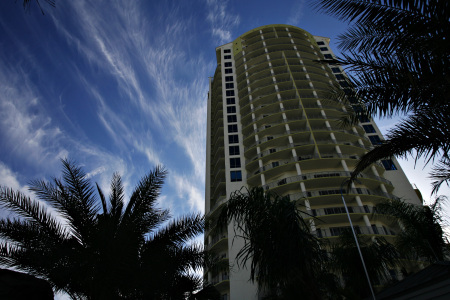
For the latest month of data prices fell an additional 4 percent.  Now this is coming at a seasonal time when real estate values usually see price increases.  But people are pulling back and spending less money on discretionary items.  This is happening for a couple of reasons including the fact that wages have been stagnant for over a decade and the underemployment rate is still near peak levels.  Commercial real estate in places like Las Vegas has crashed because who is out buying million dollar condos in this market?  Very few and that is why you are seeing many places having vacancy rates of 50, 60, or even 70 percent.

vacant condos

TALLAHASSEE — Condo bills have flooded the Capitol.

More than five dozen have been filed during the legislative session, as Florida grapples with its real estate crisis. But boil down the language of the proposals to help cash-strapped condo dwellers, and there are only a handful of ideas:

Make it easier for investors to buy multiple units in empty buildings. Delay state-mandated upgrades. Discover ways to punish owners who don’t pay skyrocketing association dues.”

So instead of letting prices correct and allowing markets to set the actual price based on lower incomes, the government and specifically the banking and housing industry are trying to do everything to keep home prices inflated.  Ironically they are using agencies that were intended to help low to moderate income buyers purchase, in essence, affordable housing.   And if the prices don’t stay inflated, they offer big discounts only to their crony friends.  So how exactly is this benefitting the typical American family?

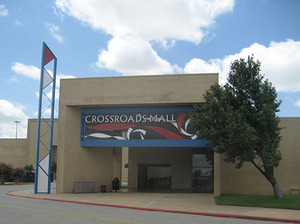
Over a year ago, the U.S. Treasury was secretly discussing “Plan B” about gearing up for a giant commercial real estate bailout.  Not much was said about this in the mainstream media.  Yet now we know that banks specifically the Fed are taking on incredible amounts of CRE loans onto their books.  In other words, the bailout is already happening.  Think this isn’t the case?  We now own a mall out in Oklahoma:

mall

Source:  NPR

“(NPR) As part of the bailouts of AIG and Bear Stearns, the Federal Reserve Bank of New York spent more than $70 billion to buy toxic assets the companies owned. Last week, prompted by a lawsuit filed by Bloomberg News, the Fed finally told the world exactly what it bought.

The Fed now owns loans to Hilton hotels in Hawaii, Puerto Rico, Malaysia and Trinidad. It owns loans to the Miami airport, and the Civic Opera House in Chicago.

It also owned a loan to Crossroads Mall in Oklahoma City. Then, when the owners of the mall couldn’t make the payments, the Fed foreclosed. So now it owns the mall, which includes a Chick-fil-A and an AMC theater.”

How much demand exists for this out in the current market?  There isn’t much if you look at current CRE values.  But prices are continually distorted as more and more money is filtered to the banking sector of the economy.  Keep in mind that many banks have incredible amounts of CRE debt.  As we just saw with existing home sales, without massive tax subsidies the market is still overpriced.  CRE values are coming down to reflect their true values yet the suspension of mark to market and the ability of banks to roll over bad loans keeps price discovery hidden long enough to devise additional ways to push this toxic waste to taxpayers.

The fact that the entire banking system is now held up by taxpayer money, we have in effect nationalized the banking system with no actual benefits of nationalization.  That is, all the profits go to banks while all the losses hit the taxpayer.  This goes for Bank of America, JP Morgan, Wells Fargo, AIG, Goldman Sachs, Fannie Mae, Freddie Mac, FHA, and every other entity that is a ward of the state in one way or another.

Commercial real estate has gotten zero play in the mainstream media even though this is a $3 trillion market.  Does the public drive by an empty condo building or strip mall and think about the larger implications?  Maybe they don’t and that is why the government and banks are working together to slowly work their shadow bailout.


As GOP and Some Top Dems Unite in Opposing NY Islamic Community Center, a Roundtable Discussion with Mother of 9/11 Victim, Rabbi, Muslim Lawmaker and Islamic Scholar

19 Aug

As GOP and Some Top Dems Unite in Opposing NY Islamic Community Center, a Roundtable Discussion with Mother of 9/11 Victim, Rabbi, Muslim Lawmaker and Islamic Scholar

Mosque_web_ok2

We spend the hour on the controversy around the proposed construction of an Islamic community center in Lower Manhattan, which has turned into a national issue. Opposition to the center first started among fringe, right-wing blogs but has swept into the mainstream, with some Democrats, including Senate Majority Leader Harry Reid, coming out against it. Republicans have vowed to make the controversy a campaign issue in the fall. We host a roundtable with four guests: Minnesota Representative Keith Ellison, the first Muslim elected to Congress; Rabbi Irwin Kula of the National Jewish Center for Learning and Leadership; Islamic scholar John Esposito of Georgetown University; and Talat Hamdani, whose son Salman died on 9/11 in the attacks on the World Trade Center. [includes rush transcript]

Guests:

Talat Hamdani, her son Salman died on 9/11 in the attacks on the World Trade Center.

Rabbi Irwin Kula, president of the National Jewish Center for Learning and Leadership.

John Esposito, Professor of Islamic Studies at Georgetown University.

Rep. Keith Ellison (D-MN.), First Muslim elected to Congress.


ANJALI KAMAT: Today we spend the hour on the controversy around the proposed construction of an Islamic community center in Lower Manhattan, an issue that has dominated the news over the past few days. Opposition to the center first started among fringe right-wing blogs, who labeled it the “Ground Zero mosque.” Over the past few weeks, the issue has been swept into the mainstream, with President Obama ultimately weighing in last week.

The proposed facility, called Park51, is actually two blocks from Ground Zero and is described by the Cordoba Initiative, which is spearheading it, as a community center which will house, quote, “a gym, […] pool, restaurant, [a] 500-person auditorium, [a] 9/11 memorial, [a] multi-faith chapel, office and [a] conference space, and [a] prayer space.”

The project is headed by Imam Feisal Abdul Rauf, a Muslim cleric who’s been labeled by right-wing critics as an extremist. In fact, Imam Feisal traveled overseas in 2006 with one of President Bush’s closest aides, Karen Hughes. He also helped the FBI with counterterrorism efforts after 9/11.

The proposed community center has nevertheless sparked national headlines, with Republicans vowing to make the controversy a campaign issue in the fall. President Obama addressed the issue on Friday during an iftar dinner celebrating the Islamic holy month of Ramadan in the White House State Dining Room.

PRESIDENT BARACK OBAMA: The 9/11 attacks were a deeply traumatic event for our country, and the pain and the experience of suffering by those who lost loved ones is just unimaginable. So I understand the emotions that this issue engenders, and Ground Zero is indeed hallowed ground. But let me be clear, as a citizen and as president, I believe that Muslims have the right to practice their religion, as everyone else in this country. And that includes—that includes the right to build a place of worship and a community center on private property in Lower Manhattan, in accordance with local laws and ordinances. This is America. And our commitment to religious freedom must be unshakable. The principle that people of all faiths are welcome in this country and that they will not be treated differently by their government is essential to who we are.

ANJALI KAMAT: Less than twenty-four hours later, President Obama was asked about the Islamic community center by a reporter and appeared to backtrack from his statement of the night before.

PRESIDENT BARACK OBAMA: I was not commenting, and I will not comment, on the wisdom of making a decision to put a mosque there. I was commenting very specifically on the right that people have that dates back to our founding. That’s what our country is about.

ANJALI KAMAT: Meanwhile, Senate Majority Leader Harry Reid this week became the most prominent Democrat to oppose the construction of the facility when he said it should be built in another location.

SEN. HARRY REID: My statement, I think, is pretty simple. Constitution gives us freedom of religion. I think that it’s very obvious that the mosque should be built someplace else, and that’s what I said.

ANJALI KAMAT: In New York, Governor David Paterson’s office said yesterday that they will meet with the developers of the Cordoba House project. Last week, Paterson offered the developers state-owned land to relocate the center far away from Ground Zero. The developers rejected the offer. They also denied that any meeting has been scheduled with Paterson. Project developer Sharif El-Gamal was interviewed on local news station NY1 on Tuesday. He criticized lawmakers who are opposing the center.

SHARIF EL-GAMAL: It’s a really sad day for America when our politicians choose to look at a constitutional right and use that as basis for their elections. This is not a debate. This is not a debate. This is us as Muslim Americans giving back to our community.

AMY GOODMAN: Today we spend the hour on this issue. We’ll speak with the first Muslim elected to Congress, Minnesota Congress member Keith Ellison. Rabbi Irwin Kula is with us. He’s supporting the Cordoba House. Islamic scholar John Esposito will join us.

And we’re joined by Talat Hamdani. Her son Salman died on 9/11 in the attacks on the World Trade Center. Salman was twenty-three years old. He was a police cadet, an emergency medical technician. He had a degree in biochemistry and was headed to his job as a research assistant at Rockefeller University when the planes hit.

First we’re going to go back seven years. It was on the eve of September 11, 2003. It was there that I met Talat and her now late husband Mohammad Saleem Hamdani as they walked to Ground Zero honoring the dead and talking about their son.

MOHAMMAD SALEEM HAMDANI: Actually, I was sleeping at that time, you know, and my sister-in-law, she called me, and she said, “Did you heard something?” I said, “No.” And she said that one tower already fall down. And the first word from my mouth was that, “Oh, my god! My son is there!”

TALAT HAMDANI: We tried to contact him on his cell, Salman, but he wasn’t answering. And then I remembered, the day before, when he came home, he had forgotten his cell phone on the job. He worked at Rockefeller, which is 65 Street and York Avenue. So, being the type of person that he was, an EMT and a police cadet and—apart from being an EMT and police cadet, he was a very, you know, kind person, very generous, very helpful. He would—we knew he would go down to help over there, and if he saw such a disaster, he would respond to it. There was a call given out for all the EMTs to come forward for the rescue help. And finally, his brother, my husband’s brother, went to his office, and they told him he never reported to work. And we waited for him to call home that night. The first night, we were—I wasn’t worried. My husband was. I wasn’t worried. But then—so, the next—that’s how the day went by, you know, just waiting for him to call and—the call that never came.

And the third day, we went down to the center that they had made for the families to come and write their—give their names of their loved ones. Armory, it was. Yes, it was the Armory. We went down there, and we registered his name, and we gave our swab samples for the DNA. And we made a flier, searching for him. We put down his name as Sal Hamdani. My brother did not put down his name, the first name, Mohammad, for certain reasons. And we searched for him. Nobody had seen him. We went down the following weeks. We went down to the Ground Zero itself, asking the firemen, showing them his picture. Maybe they saw him. But nobody saw him at all.

AMY GOODMAN: Talat and Saleem Hamdani talking about their son Salman, who died at Ground Zero on September, 11th, 2001. Talat Hamdani is with us now.

Thank you so much for being with us. I know that’s hard for you to see, because you’re both not only talking about your son, but after that, a year later, you lost your husband Saleem.

TALAT HAMDANI: Thank you for having me. Yes, it’s traumatic. Yes, definitely.

AMY GOODMAN: I mean, the story of your son is a remarkable one, because he was like many first responders who went down and died, but the story got more complicated. Talk about what happened when you went first looking all over for him, going to the hospitals, to the morgues. Then you went to Mecca to pray to pray for him.

TALAT HAMDANI: A month later, yes.

AMY GOODMAN: And at that time, a New York Post headline appeared, that said, “Missing or Hiding? Mystery of the NYPD Cadet from Pakistan,” screamed the Post headline. The sensational article noted that someone fitting your son’s description had been seen near the Midtown Tunnel—

TALAT HAMDANI: Midtown Tunnel.

AMY GOODMAN: —a full month after 9/11. You were interrogated. His internet use, his politics, were investigated. What happened then, how you came back to this chaos, when you thought you simply had lost your son at Ground Zero?

TALAT HAMDANI: Well, after 9/11 happened, and like a month later, you know, after we came back from Mecca, there was this voice message on my machine from Congressman Ackerman’s office to contact him, and maybe he’ll help me find my son. He has some news about him. So we contacted his office, and we were interrogated by Congressman Ackerman about his faith and about us and everything. And he led us to believe that maybe he was detained by the INS, by the ICE. And I said, “He’s an American citizen.” But he said, “Well, he wasn’t born here.” So we were—you know, there was hope, even though being detained, but that hope of being alive. I’ll take it even today. So, I kept, you know, speaking up, because I had to clear his name. If I had not done so, he might have—he definitely would have gone down in history as another, you know, terrorist linked with those attacks. So then, on March 20th, we were notified at 11:30 p.m that his remains—

AMY GOODMAN: This is about six months later.

TALAT HAMDANI: Six months later. And we had the funeral. You know, being a cadet, the NYPD honored him. He went under the American flag—

AMY GOODMAN: The New York Police Department.

TALAT HAMDANI: Yes. He went under the American flag, which he said, “That is honor, Mama.” Three years ago, you know, we know someone who died who was a lieutenant, and he said, “Mama, that is honor, and that is how I want to go.” And that is how he went.

AMY GOODMAN: And you had the funeral at the mosque on East 96th Street.

TALAT HAMDANI: Yes.

AMY GOODMAN: Mayor Bloomberg spoke. The Police Commissioner Ray Kelly spoke. Congressman Ackerman spoke.

TALAT HAMDANI: Ackerman came, yes.

AMY GOODMAN: And this was after newspapers were camped outside, and cameras, your house, looking for the so-called terrorist.

TALAT HAMDANI: Oh, it was horrible. It was like they descended like vultures upon my house.

AMY GOODMAN: President Bush talked about him as a hero. Salman is named in the USA PATRIOT Act as a hero.

TALAT HAMDANI: Yes, he is.

AMY GOODMAN: So it all turned around. But your son remains dead, as over—as, what, close to 3,000 people died on September 11th.

TALAT HAMDANI: He was one of them, yes, definitely.

AMY GOODMAN: And so, today, come, what, almost nine years later—

TALAT HAMDANI: Nine years.

AMY GOODMAN: —and a community center, an Islamic community center and mosque, is proposed being built a couple of blocks from Ground Zero. Your thoughts?

TALAT HAMDANI: The objection to this Islamic cultural center, I think they are illegal, because the zoning has been approved. There’s nothing wrong with it. People, though they object—some 9/11 families do object to it. They call it insensitivity. But it’s not about sensitivity or insensitivity, about emotions; it’s about the legality of the situation. It is about our rights as Americans. We are protected under the Constitution. There is freedom of religion. You know, if it’s one faith today, it’s going to be another faith tomorrow. That is scary. And to scapegoat the Muslims for the acts of a foreign terrorist, that is—that is hatred. That is wrong, because if we go by that argument, that we were attacked by a foreign terrorist group, who did this in the name of, you know, my faith, Islam, and hence all the Muslims are terrorists, as has been happening since 9/11, I say we have carried the cross. No more. No more. So, if that argument is valid, then, by that token, Timothy McVeigh’s actions also makes all Christians terrorists. So, that is wrong.

AMY GOODMAN: We’re going to break and come back to this discussion. Again, we’ll be spending the hour on the controversy of the Islamic cultural center, the proposal for it to be built near Ground Zero. This is Democracy Now! Back in a minute.

[break]

AMY GOODMAN: Our guests are Talat Hamdani—her son died at the World Trade Center in the 9/11 attacks. He was among scores of Muslims who died among the close to 3,000 people who died. We’re also joined by Rabbi Irwin Kula, who’s president of the National Jewish Center for Learning and Leadership. John Esposito is with us, professor of Islamic studies at Georgetown University. And Congressman Keith Ellison, Democrat from Minnesota, the first Muslim elected to Congress. I’m Amy Goodman, with Anjali Kamat. Anjali?

ANJALI KAMAT: Congressman Ellison, I want to go to you. What is—why are you supporting the Park51 project? And what is your reaction to the opposition to the project from Democrats, most prominently Harry Reid?

REP. KEITH ELLISON: I have three basic reasons why I think that this is a project that has merit and should move forward.

First of all, by supporting this project, we directly undermine and counteract the narrative of the transnational terrorists who claim that America is at war with Islam. America is not at war with Islam. And all we have to do to demonstrate that is to stand on our Constitution, which guarantees the freedom of worship for all Americans. So, the fact is, is that while Anwar Awlaki and other people like that are trying to argue that the United States is against Islam, America has a Constitution, and hopefully a majority of its population which still believes in religious freedom and tolerance. And so, that is the first reason.

Second reason is that it’s the constitutional right of all Americans to worship as they see fit. And if this project is turned back, it will embolden elements not only in New York, but all over the country, that are trying to stop mosques literally all over the country. Now, of course, this is not a mosque. But the fact is, is that Muslims from New York and in Sheepshead Bay, including that, and other places in Kentucky, places in Michigan, places in Wisconsin, there are these local elements who are fearful about what Muslims represent in this country and are trying to stop them from freedom of worship.

And then, of course, the third reason is the reason that is the very founding of this country. I mean, every school kid knows that when the Pilgrims came to the United States—well, what is now the United States—and landed on Plymouth Rock, it was because they were being persecuted from freedom of practice of their religion. And so, the very root elements of this country are in freedom of faith. And I’m worried that, as we see in Europe, you know, minarets being banned, we see hijabs being banned, that this is a pernicious development, and we should hold fast to our heritage of religious tolerance in the United States.

Now, what do I think about fellow Democrats? Unfortunately, I think that some of them are in some tight races. Their opponents have made this into a divisive wedge issue. And they blinked on the Constitution, because they’re afraid of their prospects in November. But I just want to tell any Democrat that, look, you standing on religious tolerance and freedom is going to be a winning election issue, because this resonates with Americans.

AMY GOODMAN: Well, let me ask you about President Obama. He made a strong statement on Friday night at a dinner—

REP. KEITH ELLISON: Yes, he did.

AMY GOODMAN: —breaking the fast, the Ramadan—were you there, Congressman Ellison?

REP. KEITH ELLISON: The iftar.

AMY GOODMAN: At iftar. Were you there?

REP. KEITH ELLISON: No, I was on the opposite end of the country with Nancy Pelosi. I was not with the President. But I had been there every year except this one. But I had other obligations that night. But I was aware of the speech, and I was very proud of the President.

AMY GOODMAN: So I wanted to ask what you thought the next day, which surprised many, when this was his response to a follow-up question.

PRESIDENT BARACK OBAMA: I was not commenting, and I will not comment, on the wisdom of making a decision to put a mosque there. I was commenting very specifically on the right that people have that dates back to our founding. That’s what our country is about.

AMY GOODMAN: Many people saw this as President Obama backtracking. Congressman Ellison, your response?

REP. KEITH ELLISON: Well, I don’t think those people are correct. I think no president, no congressman, should be urging or trying to advocate for the erection of a religious institution or the defeat of the building of that same institution. It’s our job to protect people’s rights. It’s not our job to tell people where to put a synagogue or where to put a Buddhist temple or where to put a church or a mosque. The President is correct. He should not be in the business of advocating the construction of a religious institution. What he should be doing is saying that everybody has a right to pursue their rights and that he is going to uphold and defend the Constitution, which means he’s going to guarantee their right to do it. And that includes not creating a hostile atmosphere so that people are afraid or inhibited or chilled from exercising their rights, as politicians like Peter King and many others have done. So I don’t think the President’s wrong.

ANJALI KAMAT: Rabbi Irwin Kula, you wanted to interject?

RABBI IRWIN KULA: Yeah. I understand what Keith is saying, and the President has to be careful, and the politics of this is—are so outlandish. But I actually think the distinction between the right to build and the wisdom to build is a very, very, very dangerous distinction. It actually is pernicious, in a way. And I would have liked the President to say something like this: “I reject the premises of the question, because I know where that question is coming from. That question is coming from already a premise that there are these terrorists and these American Muslims, and they’re equivalent. And therefore, you’re asking me about the wisdom of American Muslims, who have been in New York for a long time in a mosque that was twenty—that was within twelve blocks for the last twenty-seven years. And the very fact of the question of the wisdom is actually to presume suspicion. And so, I reject the question. There’s only two—there’s only one wisdom I care about: the wisdom of the Constitution, I care about, and the wisdom of distinguishing between our genuine enemies and American citizens.”

AMY GOODMAN: Well, Rabbi Kula, let me ask you about the statement of the Anti-Defamation League. It pubished a statement opposing the Park51 project, saying, quote, “Ultimately this is not a question of rights, but a question of what is right. In our judgment,” they said, “building an Islamic center in the shadow of the World Trade Center will cause some victims more pain—unnecessarily—and that is not right.” The ADL national director Abraham Foxman later defended this position on CNN.

ABRAHAM FOXMAN: Our position basically was an appeal to the imam and his supporters. If you want to heal, if you want to reconcile, is this the best place to do it? Should you do it in face—in the face of those who are saying to you, most of the victims, families of the victims, the responders, are saying, “Please don’t do it here. Please don’t do it in our cemetery.” I believe, on this issue, the voices, the feelings, the emotions of the families of the victims of the responders, I think take precedent maybe over even the Mayor’s.

AMY GOODMAN: That was Abe Foxman, head of the Anti-Defamation League. Rabbi Kula, your response?

RABBI IRWIN KULA: I mean, I’m just deeply disappointed, and I was, you know, quoted as saying I think the ADL should be ashamed of itself. I think the sad thing here is that Abe Foxman, since 9/11, has been one of the most important advocates to ensure that there was not defamation and not prejudice for Muslims, and the shame here is that he actually knows Daisy and knows Imam Feisal for a long time. And so, what I think what we really have here is tremendous political pressure.

AMY GOODMAN: And Daisy is Daisy Khan, the wife of Imam Feisal—

RABBI IRWIN KULA: And Daisy Khan, I’m sorry, yeah, the wife of Imam Feisal Abdul Rauf. And what we have here is tremendous political pressure. And I’m sure the stories are going to come out in the next months of the kinds of pressures that were put on somebody like Abe. And you can see the torturous kinds of statement that he had to make about the feelings, I mean, which—anguish, and I think we need to say something, that the anguish of people does not automatically translate into public policy. And sometimes anguish and really, really personal suffering needs to be disconnected from public policy, because anguish doesn’t allow us to abandon rationality. Anguish doesn’t allow us to abandon kind of first principles about what our country stands for.

And I had two friends who died in the World Trade Center. I was very involved in this for a long time. And to be able to use the sensitivities of people to really—to really stoke fear, there’s something very cynical about that. And there isn’t such a thing as the sensitivities of 9/11 families. There are a lot of different 9/11 families, and there are not only 9/11 families who lost directly people, but there are 9/11 families who were forced out of their homes for years in the neighborhood. So, what do we mean by the “the feelings of 9/11 families”? These are abstractions used to actually stoke fear in the country.

AMY GOODMAN: Let me ask you about Imam Rauf, Imam Feisal Abdul Rauf, who is headed, by the way, on a State Department mission for two weeks to the Middle East—

RABBI IRWIN KULA: Right. Exactly.

AMY GOODMAN: —who worked for President Bush’s State Department, worked with one of his closest aides, Karen Hughes—

RABBI IRWIN KULA: Right.

AMY GOODMAN: —when she was doing that public diplomacy to reach out to Muslims.

RABBI IRWIN KULA: Traveled with, half the world.

AMY GOODMAN: How do you know him?

RABBI IRWIN KULA: Well, kind of in the interfaith work that we’ve been doing over the last decade. I was one of the readers of his book, What’s Right with Islam: A New Vision of Muslims in America. We were in Australia recently, at the World Parliament of World Religions. You know, in the interfaith world, there aren’t that many people working at the cutting edge of interfaith. That is what’s so crazy about this story. Imam Feisal has been at the cutting edge of whatever we mean by “moderate Islam.” I mean, those words weren’t even used until very, very recently. This is a guy who, well before 9/11, he had two books that are very, very important—Islam: A Search for Meaning and Islam: A Sacred Law. These are things that people need to read. And it’s so easy to take one comment out of context. Any of us who have been in the media, any one of us who have been interviewed, you can take a statement and turn someone into a radical and turn someone into a terrorist. This guy has been at the highest echelons—State Department, FBI. He has spoken in the Aspen Institute. He’s spoken in Washington Cathedral. This is—I mean, it’s really crazy.

And that’s another part of the story that’s very scary. I mean, the community board, before anything, voted this 15-0. There was an amazing conversation. In fact, there was a request from—of Daisy Khan: Could you put a 9/11 memorial inside of the—of what is now Park51? And he said, “Of course. We’re planning on doing that.” And it was—this got stoked by a very small group of people, and then—what I would say is an irresponsible national leadership, whether it’s Gingrich and Palin, and then a certain element of the media. And what’s very scary is, what was a local issue that was—that was a non-issue. This is a group of people, led by Imam Feisal, that has been ten blocks from there for the last twenty-seven years. This is a complete non-issue. And so, what it really says is, what’s going on in America?

AMY GOODMAN: I mean, what’s very interesting, as Nate Silver points out, well-known pollster, a plurality of Manhattanites are actually for this.

RABBI IRWIN KULA: Even now.

AMY GOODMAN: Even now.

RABBI IRWIN KULA: Right.

AMY GOODMAN: When—with this swirl of negative publicity. You also have the issue of conservatives attacking, and yet you have—you know, who are very concerned about states’ rights. This went through this long process. Among them, the Landmarks Commission said they’re not going to make this a landmark, this building, that it could be rebuilt. Can you talk about what it means for conservatives to talk about Imam Feisal as a secret radical?

RABBI IRWIN KULA: Well, I think what happens for—in a hyper kind of twenty-four/seven media is, as soon as words like “radical,” as soon as words like “extremist” come out, they have a life of their own. And because we’re on a tinderbox right now in the country altogether, when you have 20 percent of Americans unemployed, you know, or even off—they’re not even looking for employment anymore—you have so many Americans in very, very serious pain, when you have so much change happening in a country, sociological and cultural change, and religious change, and when you have so much going on, there’s a kind of tinderbox, and there’s a lot of fear and a lot of anger. And it calls for incredibly mature leadership—by the way, political leadership and religious leadership. And it’s so easy to stoke those fears for political capital. And that’s what we have. So, you put out the word “terrorism” and “extremist,” and it’s attached to him forever. Forever.

ANJALI KAMAT: I want to bring in Professor John Esposito into the conversation. He’s the university professor of religion and international affairs at Georgetown University and is author of several books. Most recent is The Future of Islam. Professor Esposito, I want to play a clip for you. It’s the proposed Islamic center near Ground Zero has generated a flood of absurd comparisons from the right, including Rush Limbaugh and Newt Gingrich.

NEWT GINGRICH: Those folks don’t have any interest in reaching out to the community. They’re trying to make a case about supremacy. That’s why they won’t go anywhere else. That’s why they won’t accept any other offer. And I think we ought to be honest about the fact that we have a right—and this happens all the time in America. You know, Nazis don’t have the right to put up a sign next to the Holocaust Museum in Washington. We would never accept the Japanese putting up a site next to Pearl Harbor. There’s no reason for us to accept a mosque next to the World Trade Center.

RUSH LIMBAUGH: Let me ask you, what would happen, do you think, if the Ku Klux Klan wanted to establish a memorial at Gettysburg?

CALLER: Well, you know, I don’t know. Nothing’s happening in Lower Manhattan.

RUSH LIMBAUGH: What do you mean you don’t know? They wouldn’t get to first base. Nobody would put up with the Klan building a memorial anywhere, much less Gettysburg.

CALLER: Well, you’re right there, but where is the—where is the public outrage? If we don’t have it for Lower Manhattan, do you think it’ll—

RUSH LIMBAUGH: The public outrage is there! You’re just not seeing it march in the street.

ANJALI KAMAT: That was Rush Limbaugh talking to a caller. Professor Esposito, you’ve said that Islamophobia needs to be taken as seriously as anti-Semitism. Talk about these clips, what the right is saying and the hate it’s whipping up.

JOHN ESPOSITO: Well, I think it’s very clear what’s happening here. Note how Rush Limbaugh talks about the Ku Klux Klan. So he’s equating what? American Muslims and the vast majority of Muslims in the world with the Ku Klux Klan? What’s clear here is a notion of collective guilt and punishment. Let me begin with just a brief quote from an American Muslim who’s also a prominent professional on this issue: “It’s a matter of principle and not the personalities involved. They may be doing it for all the wrong reasons, but we’re being attacked simply and only for not knowing our place, not being sufficiently sorry for a crime we didn’t commit. It’s like we need to assume some collective guilt for 9/11 and act accordingly.”

And I think that when you see people—for example, Newt Gingrich. Here’s somebody who’s old enough, from the South, can remember the problems of racism and civil rights. He also is reportedly a Christian. In fact, some reports say he’s a Catholic. He’s got to remember how a theology of anti-Semitism led to a history of pogroms that ultimately led to the Final Solution. And much of that was based on collective guilt, let alone what we did to the Japanese. The fact that folks can say the things that they’re saying now and that media will often publish them—they would use words that media would never allow if one were talking about Jews or African Americans today, and most probably Italian Americans—what we’re seeing is the tip of the iceberg of a social cancer that’s been growing in America for the last decade.

AMY GOODMAN: Rabbi Kula?

RABBI IRWIN KULA: Yeah, I actually agree. I think, very important, when you hear terms like “those folks”—in other words, forget about the tropes using Nazi, Ku Klux Klan, because that is so clear. The more subtle, very dangerous language is when a very important politician—we’re not talking about Newt Gingrich. We’re not talking about some low-level congressperson. We’re talking about someone who has a global stage and is considered an intellectual heavyweight within the Republican Party.

AMY GOODMAN: Who will possibly be running for president on the Republican ticket.

RABBI IRWIN KULA: And a possible—when he uses words like “those folks”—well, wait a second. Imam Feisal and his community aren’t “those folks.” They had people who got killed in the World Trade Center, because actually “those folks” live in that neighborhood, which happens to be our neighborhood called Lower Manhattan, called New York, called the United States of America. And that is incredibly insidious, even more insidious than tropes of Nazi and Ku Klux Klan.

AMY GOODMAN: You lost family in the Holocaust.

RABBI IRWIN KULA: Yeah, my—I lost a lot of family—

REP. KEITH ELLISON: Amy? Amy, this is Keith. Can I dive in there?

AMY GOODMAN: Yes. Let me just hear Rabbi Kula talk about the Holocaust for one minute, and then we’re going to go to you, Congressman Elllison.

RABBI IRWIN KULA: Yeah, I just think my father came—my father came here in 1938 from Poland. He came here to escape the Holocaust. He came because of religious—for religious freedom. And here we are. You know, my father is eighty-one, and he’s watching this and can’t believe this, because if you—I mean, and this is where the professor was right. Just take out the word “Muslim” and put in the word “Jew,” and you see that this strain, which has always been a part of America—and especially when things get tense, and especially when people are under tremendous stress—and we are—it’s very easy, right, to blame somebody. And now, it turns out, you know, Muslims are getting blamed.

TALAT HAMDANI: Since 9/11. Since 9/11, we’re carrying the cross.

RABBI IRWIN KULA: Since 9/11, right. Since 9/11.

AMY GOODMAN: We’re going to go to break and come back. Congressman Ellison, we’ll go first to you. This is Democracy Now! We’re talking about the controversy swirling around the Islamic cultural center that is planned to be built in Lower Manhattan. We’ll be back in a minute.

[break]

AMY GOODMAN: Our subject for the hour, the controversy that is becoming—is increasingly raging, not only in this country, but around the world. Our guests are Talat Hamdani—she lost her son Salman on 9/11. He was one of the emergency responders. Rabbi Kula is with us. Rabbi Irwin Kula is president of the National Center for Learning and Leadership. John Esposito teaches Islamic studies at Georgetown University. And we’re joined by the first Muslim elected to Congress, Keith Ellison. He’s from Minnesota.

Congressman Ellison, you wanted to jump in here?

REP. KEITH ELLISON: Yeah. I wanted to allude to the point that you just made about the world audience. I mean, the world is watching this controversy. Everybody is sort of wondering what’s going to happen. And, you know, I guess my question to your guests—and I’d like to hear your views, as well, if you can share them—what does the rest of the world think about this? What do people who want to have a recruiting script for—to make war on the US think about this controversy? What use do they make of it, when you hear these—some of these outrageous statements that American politicians and cultural leaders are making?

AMY GOODMAN: Well, let’s go to—

REP. KEITH ELLISON: You know, so, for example, Bryan Fischer—

AMY GOODMAN: Go ahead. Bryan Fischer?

REP. KEITH ELLISON: Bryan Fischer says there should be no more mosques made—built in America. You know, some of the outrageous things that Limbaugh and Gingrich have said, Palin. What does the rest of the world think about this?

AMY GOODMAN: Last month, Tennessee Lieutenant Governor Ron Ramsey questioned whether Islam is a religion at all and suggested the Constitution’s protection of freedom of religion should not apply to Muslims. Ramsey made the comments while campaigning for the state’s Republican gubernatorial primary race.

LT. GOV. RON RAMSEY: Now, you know, I’m all about freedom of religion. I’ll obey the First Amendment as much as I obey the Second Amendment, as much as I’ll obey the Tenth Amendment, and on and on and on. But then you cross the line when they start trying to bring Sharia law here to the States, into the United States. We’re already in law, and we live under our Constitution, and they probably live under our Constitution. But it’s scary. Now, you could even argue whether being a Muslim is actually a religion, or is it a nationality, way of life or cult, whatever you want to call it. But certainly we do protect our religions, but at the same time, this is something that we are going to have to face.

AMY GOODMAN: That was Tennessee Lieutenant Governor Ron Ramsey. He is running for the governorship of Tennessee. Your response—

JOHN ESPOSITO: Amy?

AMY GOODMAN: Congressman, let me go to Professor Esposito.

JOHN ESPOSITO: Let me just make a point here, following up on Keith’s comment. The way this plays out overseas is that, to our friends in the Muslim world, which are the vast majority of Muslims, people are stunned. And it feeds a concern about, as that has existed before, that there’s a double standard—that is, that, on the one hand, we’re admired for our principles and our values, but on the other hand, there’s always been a sense that we say we stand for democracy, we say we stand for pluralism, of freedom of religion—all of these things, as the Gallup World Poll shows, vast majorities of Muslims admire. But significant numbers of Muslims around the world believe that there’s a double standard when it comes to how Muslims themselves are actually treated.

On the other hand, it plays into the extremists. The extremists wind up saying, in effect, “See? At the end of the day, to be a Muslim is to be persecuted. There is a clash of civilizations.” And I think that that’s what’s ironic. And it’s underscored by something that you and others said earlier. The problem here is not just that you have some rural rednecks who are making comments; it’s that you have people who hold responsible positions—I’m not even going to say that they are responsible people—but people who hold responsible positions in our society, whether it’s politicians, whether it’s so-called Christian ministers and others. And the fact that you could have, for example, the pastor of a church that only has eighty people, who calls for an event like burning Qur’ans, and that that could then become an international issue and get that kind of coverage, shows the depth of the problem that we face and the urgency about our need to face it.

ANJALI KAMAT: Professor Esposito, this Islamophobia is not a new phenomenon. Can you take us back, over the past decade, really, and talk about the sort of early waves of hate crimes that hit and the hate speech against Muslims?

JOHN ESPOSITO: Well, I think that when you look, for example, at particularly, you know, at post-9/11, you have a wave of hate crimes. But ironically, post-9/11, you have an America that, if you look at polling, responded a lot better than it did after the first couple of years. And I think part of that reason things got much more negative was that while President Bush made a very good distinction between terrorists and Islam, at times the Bush administration played the terrorism card so much that it fed into an American population feeling unduly under siege—not that we don’t have to be concerned about terrorism, but unduly under siege. Then what you see over the years are problems of attacks on mosques.

But more importantly, the fact that you have people like Representative King and others, you have politicians who, over the last decade, have played this card—Rick Lazio and others. You have Christian right ministers—John Hagee, Franklin Graham—these ministers saying that not that terrorists are evil, but Islam is evil. And remember that Hagee and Rod Parsley were two ministers whom McCain embraced. What people forget now when look at—as we lead up to the elections is that during the presidential elections, you could see the Islamophobia in the way in which people were trying to prove that Obama was somehow a Muslim, as if that should discredit him, and indeed Secretary Powell had to speak to that. And on the other hand, you had all the major Republican candidates playing the anti-Islam card. And that’s simply been picked up now by other political candidates now, primarily Republican, but also some Democrats.

So, Islamophobia runs very deep. But what we want to do is not acknowledge that it exists, so—or we even say, well, we shouldn’t use the term. And the reality of it is, it’s like any form of racism. We need to call a spade a spade and address it head-on. If we don’t, this will simply continue to spread.

AMY GOODMAN: I wanted to go to the comments of two New York politicians. You just mentioned, Professor Esposito, New York Republican gubernatorial candidate Rick Lazio. He was a longtime congressman. He’s now running against Andrew Cuomo for the governorship of New York. He vehemently opposes the cultural center project. He and many other conservatives have repeatedly questioned the positions taken by one of the project’s founders, Imam Feisal Rauf.

RICK LAZIO: You know, the person who is spearheading this effort, Imam Rauf, has said, on the very month that we suffered this terrible surprise attack, that America was an accessory to the crime of 9/11 and that Osama bin Laden was, in a real sense, made in the USA. This is not the voice of a bridge builder. I know they’re trying to portray this now as a situation where we’ve got peacemakers and bridge builders. But the person who’s driving this is affiliated with some of the most radical organizations that we know. He refuses to condemn Hamas as a terrorist organization, and he’s affiliated very closely with the Perdana Global group that funded the flotilla that tried to run the blockade in the Middle East.

AMY GOODMAN: Rabbi Kula, you’re saying this isn’t true?

RABBI IRWIN KULA: I mean, some of this just isn’t true. I mean, I understand facts don’t matter. I get that. I really do understand that. I’m a multicultural—I’m a post-modern person who understands there’s multiple narratives. I get it. But that literally isn’t—read the last chapter of his most recent book, Imam Feisal’s last chapter. It’s about love. It’s about a rejection of terrorism. It’s a rejection of violence. And it turns out that a piece of the Muslim world is in crisis right now. We know that. And the question is, are we going to lump every single Muslim in the world together? And that’s what Rick Lazio is doing. And it’s very, very dangerous, because it’s splitting—it’s splitting American Muslims from Americans. That’s a very dangerous thing for the country.

AMY GOODMAN: Congressman Ellison, he is a fellow—he was a fellow congressman, Rick Lazio.

REP. KEITH ELLISON: Well, to me, you know, there is this deep tradition of right-wing populism and scapegoating. He reminds me of “Pitchfork Ben” Tillman. He reminds me of George Wallace, who swore he would never be out-raced again and said, “Segregation now, segregation tomorrow, segregation forever,” as he stood in front of that schoolhouse door. I mean, there is a tradition of pandering politicians, appealing to the worst impulses in the population. I don’t know if Rick Lazio believes what he says or not. I do know that he sees an opportunity, and he is seizing that opportunity. It’s disgusting and disgraceful. And my question is, how bad do you want to be governor? Are you really willing to throw a whole set of Americans under the bus just so you can be governor?

AMY GOODMAN: I want to also be clear, Congressman Lazio was not fringe. He ran a very close race against Hillary Clinton for the Senate. They were neck and neck. And—Rabbi Kula?

RABBI IRWIN KULA: See, I think what we have to, in a sense, pull back for a second and say there are two strains, both in America, but there are two strains in all human beings. There’s a strain in human being that is afraid of the other. There’s a strain in the human being that, when we get scared and we get insecure, we either, you know, fight—we’re either afraid and fight, we either freeze, you know, or we either run away. And so, that fear is really real. And then there’s this other strain in us as human beings, that wants to reach out, that wants to connect, that recognizes that we are in this together. And those two strains, which are in every single person, are now being played out in the larger political and cultural landscape. And we have to be really—really, those of us who, for whatever reasons, are lucky enough to not be afraid—because it’s really—there’s a certain amount of it that’s just luck—how we were raised and who we got to meet—that what we have to do is we have to mitigate the fear, not make the fear worse.

JOHN ESPOSITO: Amy?

AMY GOODMAN: Let me just bring in Talat Hamdani. You leave here, and you’re going to go to a news conference outside the—

TALAT HAMDANI: It’s a meeting to—right.

AMY GOODMAN: A meeting.

TALAT HAMDANI: A meeting to—how to deal with this issue, and many different organizations who are supporting this cause, fighting for the rights of all Americans, which now are being violated, because, from my perspective, Muslims are as equal members, citizens, as any other faith in this country. They died on 9/11. They were the first responders. They also died after helping. Their children are on the frontlines. So when it comes to—

AMY GOODMAN: When you say “on the frontlines,” where?

TALAT HAMDANI: In Afghanistan and Iraq. Muslims are fighting, too. So when it comes for us to pay our duties, we do it. But when it comes to us demanding our rights, we are not getting it. We are being told, you know, “You are a terrorist,” which is very wrong. What is mine is mine. I’m doing my duty, and I want my rights. And this stoking the fear that, you know, all these politicians are jumping in on the bandwagon and trying to make it exploit, the tragedy of all those 3,000 people killed for their own political expediency, it’s disgraceful.

AMY GOODMAN: I wanted to ask Congressman Ellison, the reports from Gainesville, Florida. A Florida church with “Islam is of the devil” signs in its front lawn plans to host an “International Burn a Qur’an Day” on the ninth anniversary of the September 11th attacks. It reminds me—

REP. KEITH ELLISON: Yeah.

AMY GOODMAN: —back when you were first elected, the whole controversy around your swearing in, wanting to do it on a Qur’an.

REP. KEITH ELLISON: Well, you know, one of the things that I’d like to share with you is that when I met President Bush face to face, he shook my hand vigorously, and he said that he thought was a good thing and that he was happy that I was in the Congress. So, I mean, I think it’s true that, you know, a few years—

AMY GOODMAN: He thought it was a good thing that you were—you were swearing on—actually it was Abraham Lincoln’s Bible, is that right?

REP. KEITH ELLISON: No, no. It was Thomas Jefferson’s Qur’an.

AMY GOODMAN: I mean—I mean Thomas Jefferson’s Qur’an.

REP. KEITH ELLISON: Yeah, and yeah, President Bush was supportive. And, you know, President Bush is well aware that, you know, I’m a liberal Democrat, and he’s a conservative, but that did not stop us from agreeing that America had a very important heritage of religious tolerance that we both needed to celebrate. But you know what? This is just one of those examples of what happens when politicians and cultural leaders sort of light the fuse. And it does end up in extremely tragic situations, and that’s why it’s so important that you’re doing this program. And I just want to say to the rabbi and to Ms. Talat, who—those of you who live in New York, that I am exceedingly proud of you, and I’m so glad that you’re doing what you’re doing, because, you know, we’ve got to offer that counter-narrative. Most New Yorkers, a plurality of New Yorkers, still believe in our First Amendment heritage. I’m so proud of Mayor Bloomberg.

ANJALI KAMAT: Congressman Ellison, we just have a few seconds left, and I just want to ask you, what political rights do Muslim Americans have now? What political price can they exact, with Democrats and Republicans using this as political capital?

REP. KEITH ELLISON: Well, what actual practical rights Muslims have in America today is in the balance. It’s being determined as we speak. The fact is, is that that—the question you asked me will be answered if this mosque goes forward. And if it doesn’t, I think it will also be answered. And so, the fact is, it’s time to get busy, to reach out in love, to reach out in brother and sisterhood, and to make sure that all Americans can claim the promises of the First Amendment.

AMY GOODMAN: I want to thank you all for being with us, and this is certainly a conversation that will continue, Congressman Keith Ellison, joining us from Minneapolis, first Muslim congressman to be elected to Congress; Professor Esposito from Georgetown University; Rabbi Irwin Kula, who is president of the National Jewish Center for Learning and Leadership; and Talat Hamdani, who lost her son on 9/11.
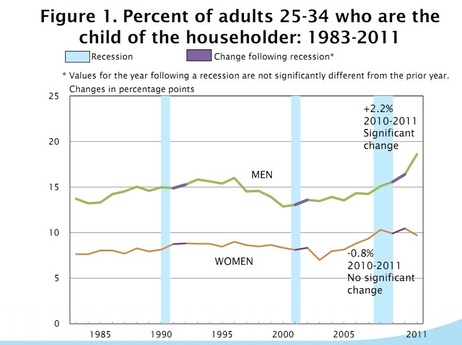


Why the silence on Khadr? Canada’s abandonment of prisoner raises questions about citizenship

15 Aug

Why the silence on Khadr?


Canada’s abandonment of prisoner raises questions about citizenship


Civis Romanus sum — “I am a Roman citizen.” On June 25, 1850, British foreign secretary Lord Palmerston, in a celebrated speech, cited this phrase in Britain’s House of Commons. He applied it to the then-controversial case of Don Pacifico — a Gibraltar-born British subject. In 1847 Pacifico, a Jew and Portuguese consul in Athens, saw his house burned down by an anti-Semitic mob. The Greek government dismissed his request for compensation.

As a subject of Queen Victoria, Pacifico appealed to Palmerston for redress. Enraging many “patriotic” Englishmen, Palmerston defended Pacifico’s claim. He said the British Empire must defend its citizens no less stoutly than the Roman. To pressure Greece into compensating Pacifico, Palmerston sent a naval squadron to blockade the port of Piraeus. After two months, Pacifico won his compensation. The arch-conservative House of Lords censured Palmerston. But the Commons overruled the Lords and backed Pacifico by 46 votes.

Point of the story? In those days, a fellow with a name like Don Pacifico didn’t exactly fit the popular stereotype of a ruddy John Bull that the English public cherished. He was a swarthy, foreign-looking Jew working for Portugal in faraway Greece. Yet he was Civis Britannicus. By law, this guaranteed him abroad, as at home, the full support of the British government in securing justice.

Translate this to Canada and the cases of Muslim Canadians caught in the U.S. “justice” system of Guantanamo and the rights-restricting Patriot Act.

These men too have been swarthy, “foreign-looking” (to some white Canadians), and of a non-Christian religion. In foggy, violent circumstances, they too ran afoul of a foreign government. Did a Canadian Lord Palmerston rush to demand fair treatment for them?

Remember Maher Arar? The Canadian government (via the RCMP) not only helped raise U.S. suspicions against him, they didn’t make a peep when U.S. authorities in New York ignored the Canadian passport Arar was travelling on, put him in solitary confinement, then deported him to Syria to be tortured.

If Canada had been a self-respecting, even mildly Palmerstonian, country, it would have raised hell with the Americans at this contempt for our passport.

Can you imagine how Americans would react if Canada ignored a U.S. passport and shipped an American citizen to another country known to torture?

In the end, Canada did right by Arar. It named an investigating commission that found him innocent. The government apologized, and compensated him with $10.5 million. To this day, even the Obama administration ignores Canadian justice and treats Arar as a likely terrorist. A diplomatic slap in the face that doesn’t really bother Canada. Did Canada’s original eagerness to entrap its own citizen deepen U.S. contempt for us?

Now today’s business: The case of Omar Khadr, a young Canadian imprisoned at Guantanamo. Using flimsy evidence, the U.S. alleges he killed, at age 15, an armed U.S. soldier in Afghanistan. From the start of Khadr’s brutal, eight-year imprisonment, Canada has not lifted a finger to offer him Don-Pacifico-like fair-treatment assistance. On the contrary, it has helped U.S. interrogators question him, even volunteering an Ottawa real estate document to try to trap him. It ignored Khadr’s repeated and specific accusations of torture.

Canada’s kind interrogators did bring Khadr a Big Mac. Not to console him, but to get him talking. Then they shared their findings with the Americans — without tying these to a U.S. commitment not to execute Khadr, a usual Canadian precaution.

Now Khadr faces a U.S. judge who says the court can take into account “confessions” obtained through torture. Does Canada denounce such a travesty, deplored by every civilized nation? Of course not. Our “Justice” Department’s obvious concern is to please U.S. military and security officials. It’s not to protect a lost and tragically manipulated young Canadian.

American detainees got “due process” outside of Guantanamo. Not Canadians — a clear case of unequal, non-Pacifico treatment. Indeed, when Canadian Federal or Supreme courts ruled for Khadr’s return to Canada or condemned his violated rights, Stephen Harper’s government ignored them.

Even Khadr’s U.S. defence lawyers can’t understand why Canada abandons, indeed often works against, its own citizens. “There is no reason why Omar cannot be brought home to face Canadian justice,” declared U.S. Lt.-Cmdr. William Kuebler in 2007. Other U.S. lawyers marvel at Canada’s shocking reluctance to stand up for its nationals. Result: An American passport makes foreign officials tremble. A Canadian one makes American officials smirk. Canada’s government makes this so.

The issue again: It’s not whether Khadr, as a child, was brainwashed into throwing a grenade. It’s not even whether his father was al-Qaida. It’s whether Canadian citizenship is worth a damn.

This year, Canada’s government, ignoring years of cruel imprisonment and torture, abandons Omar Khadr. Next year may be your turn. Then it may be too late to whine to Latin-loving lawyers: “but, Civis Canadiensis sum!”

Keith Spicer, a former Canadian commissioner of official languages and Ottawa newspaper editor, now lives in Paris.

Protests turn violent: storefronts smashed, police cars set ablaze – The Globe and Mail

26 Jun

Protests turn violent: storefronts smashed, police cars set ablaze

A police car is trashed on Queen Stree on June 26, 2010. JENNIFER ROBERTS FOR THE GLOBE AND MAIL

A protestor jumps on an abandonned police car after clashes during a G20 protest in Toronto. Jennifer Roberts/The Globe and Mail

‘This isn’t our Toronto. My response is anger,’ mayor says; 103 arrested; police chief predicts more confrontations all night


Adrian Morrow, Ann Hui and Jill Mahoney

Toronto — Globe and Mail Update

Thousands of protesters took over the streets of downtown Toronto on Saturday as isolated groups of demonstrators burned police cars, smashed windows and confronted riot police.

Black-clad protesters with bandanas covering their faces, mingling with many others in regular clothing, moved around the city centre, bringing it to a virtual standstill.

Toronto Police Chief Bill Blair told a news conference Saturday evening that his officers fought back with tear gas and have arrested at least 103 people.

“Members of this group will continue to engage in criminal acts” throughout the night, the chief predicted.

He said the main goal of police is to protect the site of the G20 summit in the downtown core – the target of the protesters’ anger – and to protect the public.

Prime Minister Stephen Harper, Ontario Premier Dalton McGuinty and Toronto Mayor David Miller also condemned the violence.

“Free speech is a principle of our democracy, but the thugs that prompted violence earlier today represent in no way, shape or form the Canadian way of life,” Mr. Harper’s spokesman Dimitri Soudas said in a statement.

Around 7:30 p.m., tight lines of riot police – some with weapons drawn – moved to take control of Queen’s Park, tackling and using batons on protesters who did not obey orders to leave. Officers on horseback galloped around to move about 500 activists away from the area, which had been sanctioned as a protest zone. Hitting their shields with their batons, riot police forced the crowd north.

The protesters then broke into separate groups with the main body marching down Yonge Street while others took University Avenue or other more direct approaches to the site of the G20 summit.

Around 9:30 p.m., riot police pushed protesters out of the intersection of Queen Street and Spadina Avenue, just blocks from the summit location.

Other clashes were reported at King and Bay streets, and the surrounding areas.

At least some of the demonstrators then moved to Yonge and Front streets, not far from the summit’s location, where they started a sit-in around 10 p.m.

Those arrested were taken to a G20 detention centre on Eastern Avenue. They included two American men who allegedly smashed windows.

Earlier, demonstrators broke the windows of dozens of businesses, including a Scotiabank, CIBC, a McDonald’s and a Starbucks. Protesters threw bricks at a CBC van, breaking its windows. TTC streetcars were abandoned on Queen Street and two were spraypainted with anti-summit graffiti and anarchy symbols.

Protesters intent on getting closer to the summit security perimeter came face-to-face with lines of police in full riot gear in pockets of the downtown throughout the afternoon and evening.

A small group of protesters headed toward the security fence in the early evening, but the perimeter was not breached. Police formed a human chain, standing shoulder-to-shoulder or with their bicycles near the zone.

“It just makes sense to be as close to the leaders as possible to make our voices heard,” said Jacob Pries as he told a crowd of a free path to the fence. Some heeded the call to action and started walking. Others stayed behind to stare down the police line.

On their way, a group of activists tore up sod and plants from a courtyard outside the Bay Adelaide Centre to spell “No G2O” on the street. “We just want to put some green space, reclaim the street a little bit,” said one activist who declined to give her name.

Recent developments:

  • Eaton Centre locked down
  • Several storefronts at Queen/John, Yonge/Adelaide, Yonge/Shuter vandalized. Starbucks, banks and McDonald’s among targets
  • At least three police cruisers set afire at King/Bay and Queen Street West
  • Subway service shut down south of Bloor street on Yonge and University lines. Shuttle buses in operation
  • Streetcars being turned back from downtown
  • GO service suspended on downtown-bound trains
  • Several hospitals restrict access to patients and families
  • The André Rieu concert at the Air Canada Centre postponed

Police maintained tight lines around the summit site.

“They’re doing their best to try to keep their peace,” said Constable Tim Garland, who characterized the police response as “measured and balanced.”

As fresh officers were poised to work the night shift, police feared the worst may not yet be over.

“It’s gonna be a very long night,” said Mike McCormack, head of the Toronto Police Association.


Protestors jump on a police car in Toronto’s financial district as anti G20 deomonstrators clash with police as the G20 summit commences on Saturday, June 26, 2010.

Mr. McCormack said that the radical protesters who attacked police cruisers and police headquarters were absolutely “disgusting” – unlike anything he has seen in his two decades as a cop. He said he witnessed many attacks on police as he wandered the downtown core.

The dynamic in the crowd changed around 3 p.m. as police donned gas masks. Some parts of the riot line were as many as three officers deep as the crowd chanted: “Let us through!”

The crowd cheered when windows were smashed, including at an Urban Outfitters near Yonge Street and Dundas Street West.

“This isn’t our Toronto. My response is anger,” Mayor Miller told CP24. “People came here deliberately to commit this kind of act.”

In a statement, Premier McGuinty condemned the vandalism and violence.

“Peaceful protest has always been part of the bedrock of our democracy. The vast majority of today’s demonstrators have been peaceful and responsible. However, willful, mindless destruction and violence have no place in our province. I appeal to all involved to allow calm to prevail,” he said.

Late in the afternoon, Craig Herbert borrowed a broom from his workplace, the Ram in the Rye, a Ryerson student pub, and went to Yonge Street near College Street to sweep up glass outside a Starbucks and a Tim Hortons.

“I don’t want to justify a billion dollar budget by wrecking shit,” he said. “I like my city.”


Police use the “Sound Cannon” to make an announcement to protesters at Queen’s Park.


Earlier in the day, thousands of demonstrators stood face-to-face with riot police at the corner of Spadina Avenue and Richmond Street West. Another line of mounted police stood behind them at the corner of Spadina Avenue and Richmond Street West. Protester set off flares, which filled the air with smoke and drew cheers from the crowd.

“We got them where we want them,” one protester shouted. “Are the stores open in Chinatown selling fireworks?” the same protester yelled.

Near the MuchMusic building on Queen Street West and John Street, police pushed back on the most aggressive protesters with their batons and shields. One man looked to be defending himself with his bare arms. Some protesters threw objects across the police line, but none appeared to breach the police barrier. Some demonstrators stood behind and watched while the rest of the marchers slowly snaked west toward Spadina.

Several protesters were being treated for head wounds by fellow demonstrators amid reports that paramedics faced delays in getting to the area.

A Globe and Mail photographer was tackled by black-clad protesters after taking their picture. Some of his equipment was damaged.

See the liveblog on your mobile device here. To view the blog, click on the play button below


“This is what democracy looks like. That is what a police state looks like,” protestors chanted Saturday afternoon as they turned the corner at University Avenue and Queen Street West.

Raw video: The Globe’s Kate Allen shot the violence and broken windows as the protests escalated.

Earlier, after speeches from union leaders at Queen’s Park, thousands of demonstrators poured into the city’s downtown in the rolling protest. Led by a contingent of women and unions, they shouted “Maternal health care includes abortion.”

By about 2 p.m., the protest reached Queen Street West, where they were met with a line of bicycle officers. A line of riot police stood shoulder to shoulder one block south at Richmond Street West, forming a line of defence. Riot police holding bean bag guns also diverted demonstrators from the American consulate on University Avenue.

Two people were arrested with “incendiary devices” at Dundas Street West and University Avenue before the protest began. A Toronto police sergeant said that police had seized several Molotov cocktails.

“Everyone is just walking around saying what they believe in and [the police are] intimidating us,” said David Sams, a self-identified anarchist from Detroit with his face covered by a black balaclava. “This is nonsense, they’re protecting the wealthy.”

All along Queen Street, shop employees looked on, amused. “What are you looking at?” one protester asked, “Go back to work!”

An employee at the Neon clothing store said she felt safe, despite the thousands of protesters filing past her window. “The store’s still open,” she said. “They can come in and shop.” As she said this, two demonstrators, a woman and her daughter, walked into the store.

Before the rally began, the protesters waited on the south lawn of the provincial legislature huddled under a colourful canopy of umbrellas while others held folded newspapers over their heads. The rain caused ink on handwritten placards to bleed. A group of drummers kept the crowd dancing and free Tibet activists formed a chanting circle, saying: “Tibet belongs to Tibetans!” Busloads of union members arrived all morning to join the protests. Most of the assembled crowd were union members, with banners and union logos everywhere.

With reports from Natalie Stechyson, Laura Blenkinsop, Katie Hewitt, Jeff Gray, Colin Freeze, Sarah Boesveld, Cigdem Iltan, Matt Frehner, Chris Hannay and Anna Mehler Paperny


Posted via email from Beyond Thoughts: There’s more to the truth than just the facts…

Design a site like this with WordPress.com
Get started